Managing fever- Like a Pro!
In the hospital, we so often see moms arriving in the middle of the night with sick children - exhausted, anxious, and convinced something is terribly wrong. And then, frustratingly, after a horrible night of “burning up,” the child’s fever has broken. He’s smiling, playing, and being his cutest self. Mom says, “I swear I’m not crazy - my child was so sick! How is he doing so well now?” I’m convinced all children come pre-programmed with that little prank.
The truth is, many parents have already done much of what we do in hospital to treat a fever before they even arrive. There is often very little difference between fever management at home and in a medical setting: paracetamol, anti-inflammatories, and encouraging fluids. The nuance usually lies in correct dosing and timing. And — the doctor's job— identifying and treating the underlying cause of the fever. But if you understand the basic principles, you can get very far managing a fever with over-the-counter fever medications that you already have in your home pharmacy cupboard.
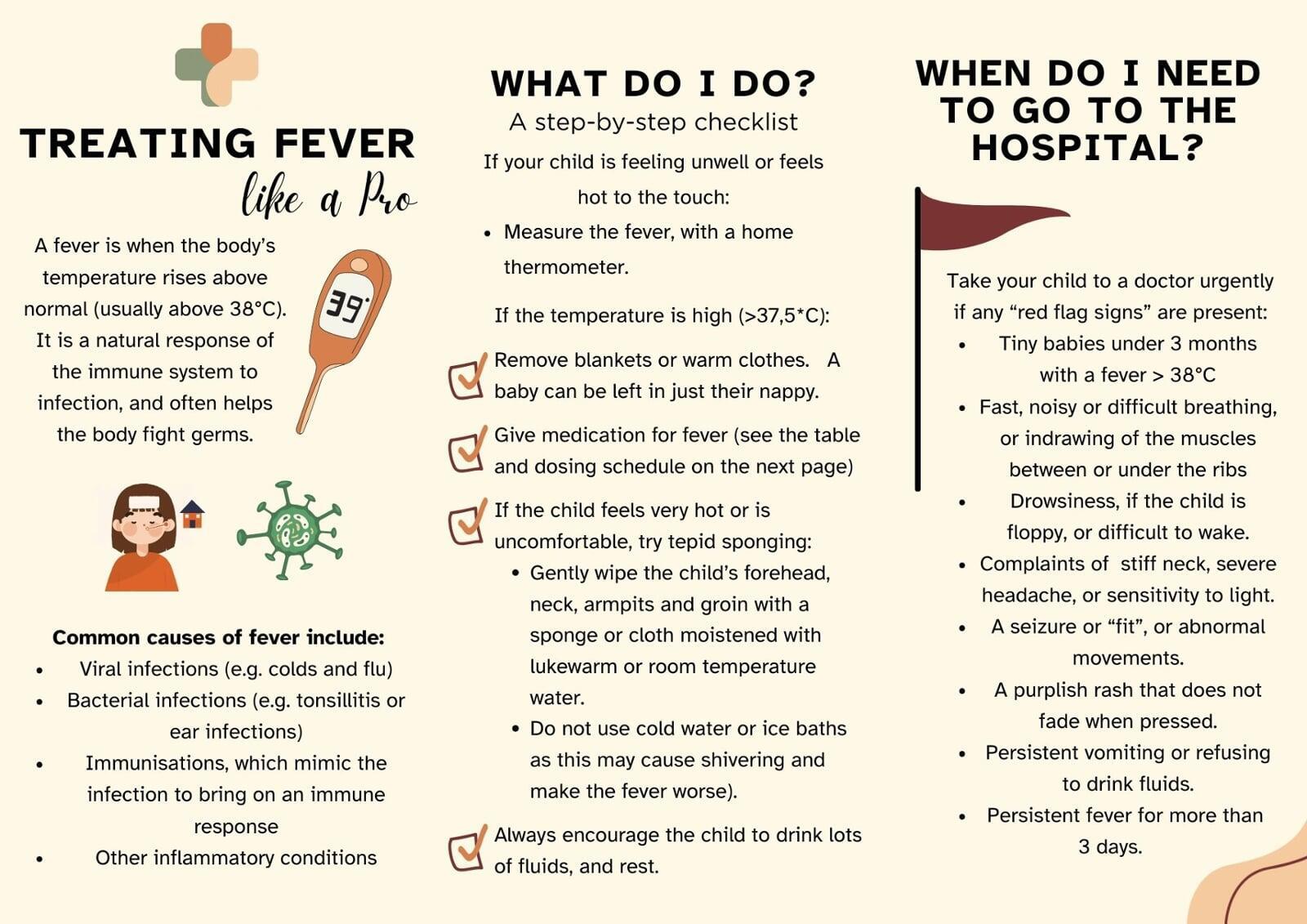
Our goal with these health education resources is to help patients feel more confident and supported by understanding why certain medications are given, when to give them, and what effect they’re meant to have. With a simple, easy-to-follow checklist, you can feel more at ease and empowered during those early-morning fever spikes. And the "red flags" list help in those grey-zone moments when you’re trying to decide whether it’s safe to wait to see your GP in the morning, or whether it’s time to head to the emergency room.
How to use the timeline below:
The timeline gives you a four-hourly dosing schedule - alternating an anti-inflammatory medication and Paracetamol, so each is dosed 8 hourly. The times are for illustration only. You can adjust the time based on your child's schedule.
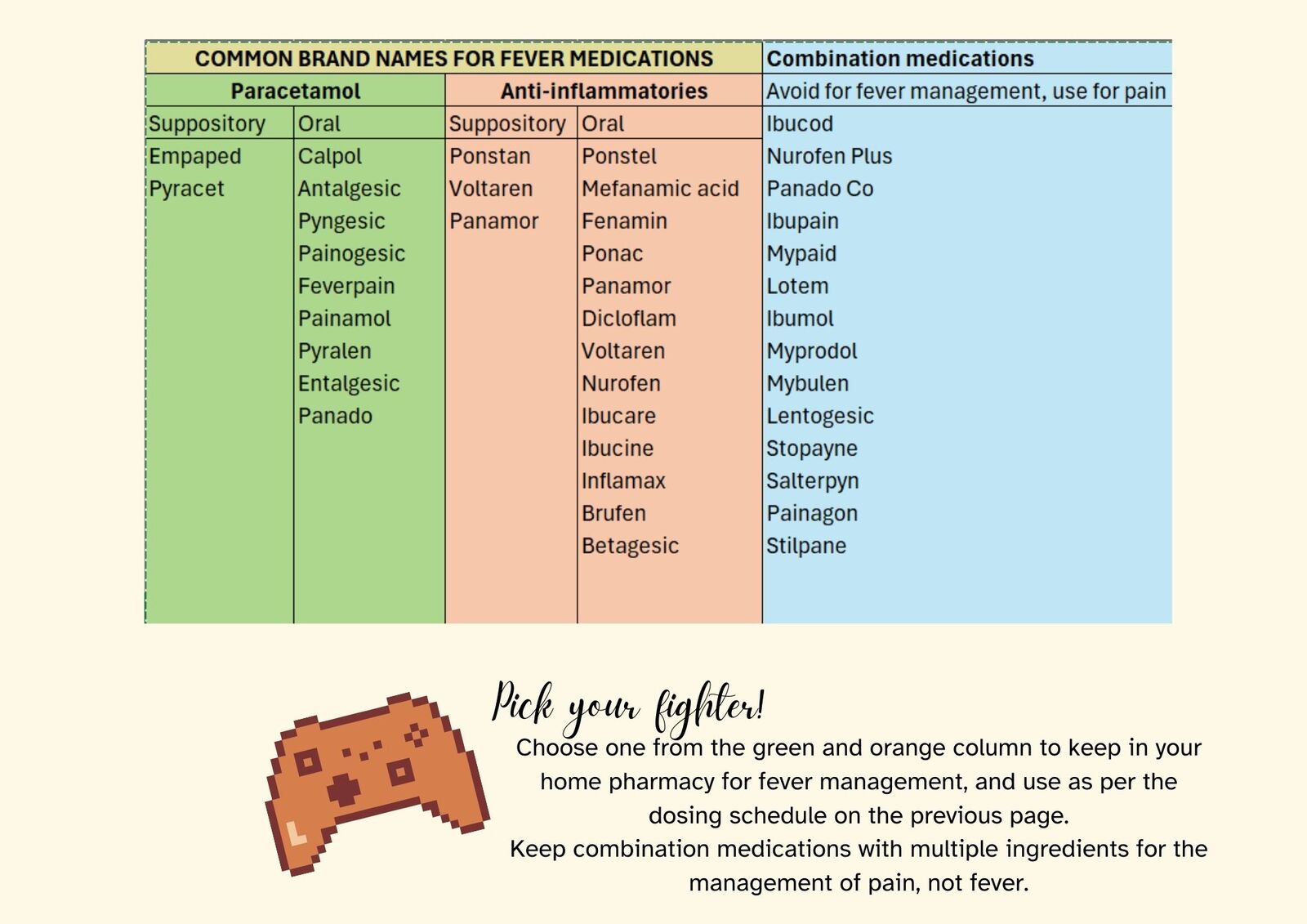
We recommend "picking a fighter" from the table below. One brand of Paracetamol, and one of an anti-inflammatory medication to keep in your cupboard. For example, you may be comfortable using Panado and Nurofen. But this is entirely up to you.
Just make you're not using a combination medication for this dosing protocol. They are best kept for treatment of pain rather than fever.
Keep a look out for our health education evening sessions where we discuss these health topics in more detail and answer common questions. Or make an appointment today for a detailed one-on-one session discussing your questions and concerns.