Understanding Anxiety: Why It Feels So Physical — and What You Can Do About It
Anxiety doesn’t just live in the mind — it lives in the body too.
We often see patients who are understandably frightened by very real physical symptoms: chest pain, shortness of breath, dizziness, or a sense of impending doom. Many worry something serious is being missed.
But here’s something important to understand: these symptoms are real — even when they’re caused by anxiety.
How Anxiety Affects the Body
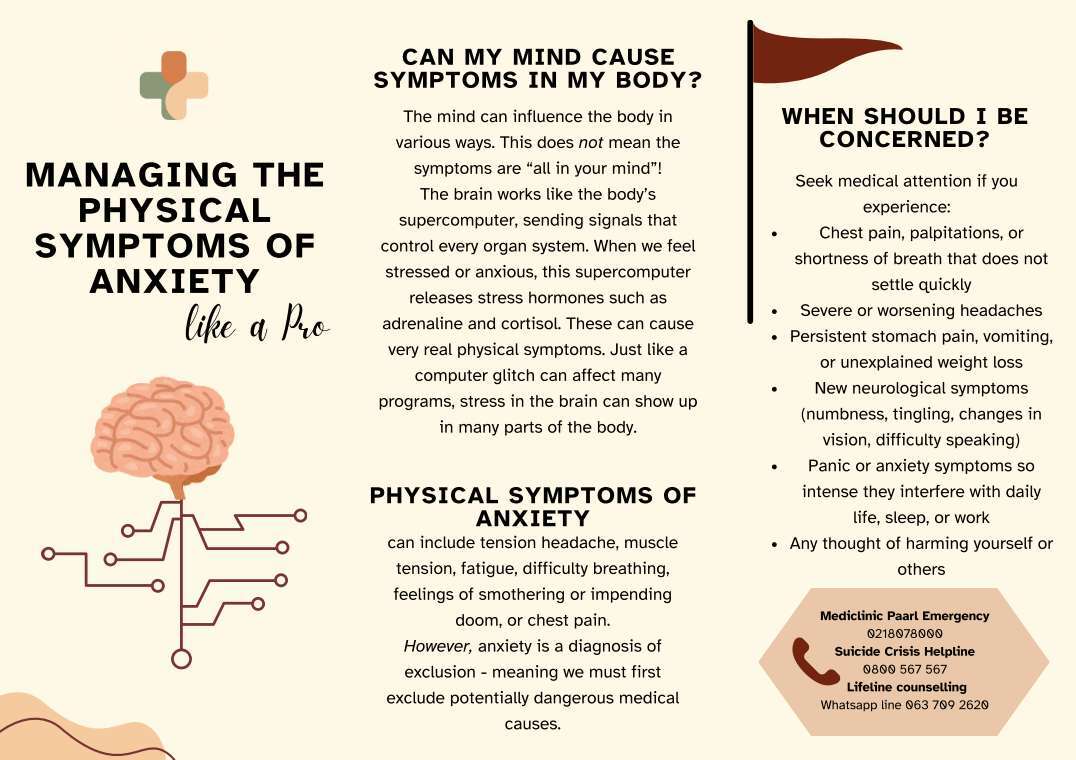
Think of the brain as the body’s supercomputer. It constantly sends signals that regulate every organ system.
When you feel stressed or anxious, your brain activates the “fight or flight” response, releasing stress hormones like adrenaline and cortisol.
These hormones are designed to protect you — but they can also cause uncomfortable physical symptoms.
Some of these symptoms can include chest pain, palpitations, feeling short of breath, muscle tension and headaches, tingling in the fingertips and around the mouth, and a feeling of impending doom.
They are not made up - they are the real effects of the changes that happen in your body due to those stress hormones.
Your heart rate, breathing rate and blood pressure increases. If you start to hyperventilate, your blood's pH can increase - which causes widespread and distressing physical symptoms.
Just like a glitch in a computer can affect multiple programs, stress in the brain can show up in many different parts of the body.
When Should You Be Concerned?
While anxiety is common, it’s important to remember that it is a diagnosis of exclusion — meaning we first need to rule out the other medical causes that can cause similar symptoms, or even be the underlying cause for the anxiety..
You should seek medical attention if you experience:
Chest pain, palpitations, or shortness of breath that is persistent and does not settle quickly
Severe or worsening headaches
Persistent vomiting, abdominal pain, or unexplained weight loss
New neurological symptoms (such as numbness, weakness, or changes in vision or speech)
Anxiety or panic symptoms that significantly interfere with daily life
Any thoughts of harming yourself or others (Suicide Crisis Helpline: 0800 567 567)
If you’re unsure, it’s always okay to get checked. That’s what we’re here for.
Managing Anxiety: A Holistic Approach
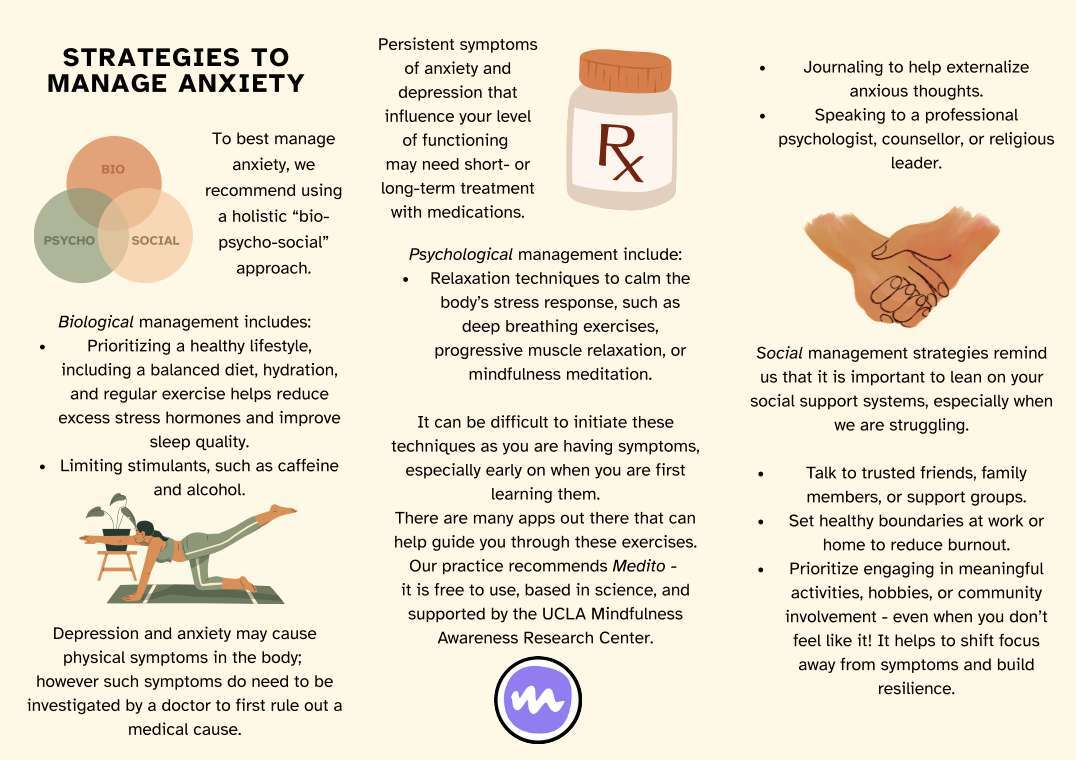
The most effective way to manage anxiety is through a bio-psycho-social approach — addressing the body, the mind, and your environment.
1. Supporting Your Body (Biological)
Simple lifestyle habits can make a big difference. Make sure you prioritise sleep, nutrition, hydration, and regular exercise. Avoid stimulants like caffeine and alcohol. These behaviours help regulate stress hormones and improve your body’s resilience.
2. Calming the Mind (Psychological)
Relaxation techniques are proven to help settle the body’s stress response. These can include deep breathing exercises, progressive muscle relaxation, journaling, and mindfulness or meditation.
These can feel difficult to start — especially in the middle of an anxiety episode — but they become more effective with practice. Guided apps can be very helpful when you’re learning. There are many out there, with various different styles of offering the content. Find the one that works best for you. Our practice likes Medito, because it's evidence-based, and free to use (important when you're paying in ZAR).
3. Leaning on Support (Social)
You don’t have to manage anxiety alone. Talk to trusted friends or family. Once you start confiding to your loved ones about these things, you often realise they have struggled with the same kind of things. This is a far more common problem than you think.
Set healthy boundaries at work and home, to avoid burnout.
Stay engaged in meaningful activities, even when it feels difficult. It may feel like effort, but it helps create meaning and releases "feel-good" neurotransmitters that help with symptoms.
Finally, consider speaking to a counsellor, psychologist, or other trusted professional. It is very helpful to get an unbiased third party to listen and help you work through difficult emotions.
A Simple Tool: Box Breathing
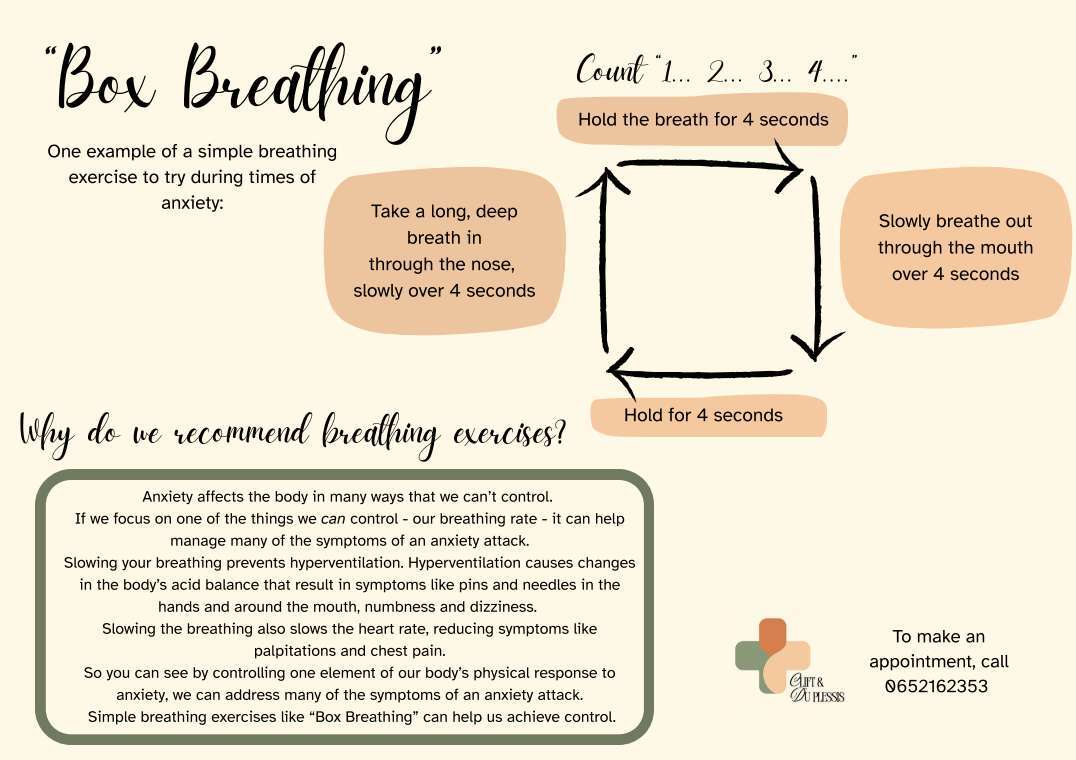
One of the most effective ways to manage the physical symptoms of anxiety is by focusing on something you can control — your breathing.
Try this simple technique:
Breathe in through your nose for 4 seconds.
Hold the breath for 4 seconds.
Breathe out slowly through your mouth for 4 seconds.
Hold again for 4 seconds.
Repeat for a few cycles.
Slowing your breathing helps prevent hyperventilation, which can cause symptoms like dizziness, tingling, spasms, and chest discomfort. It also helps slow your heart rate and calm your nervous system.
A Final Word
Anxiety can feel overwhelming, especially when it shows up physically. But understanding what’s happening in your body is often the first step toward regaining a sense of control. If your symptoms are persistent or affecting your daily life, please reach out. Support is available — and you don’t have to navigate this alone.