Dermatitis and Wet Wrapping: A Powerful Tool for Eczema Flares
If you or your child suffers from eczema (atopic dermatitis), you'll know how frustrating an eczema flare can be. The itching can become relentless, sleep is often disrupted, and the skin may become red, inflamed, cracked, or even start to ooze.
While moisturisers and prescribed creams remain the cornerstone of treatment, one lesser-known technique can be remarkably effective during moderate to severe flares: wet wrapping.
What is dermatitis?
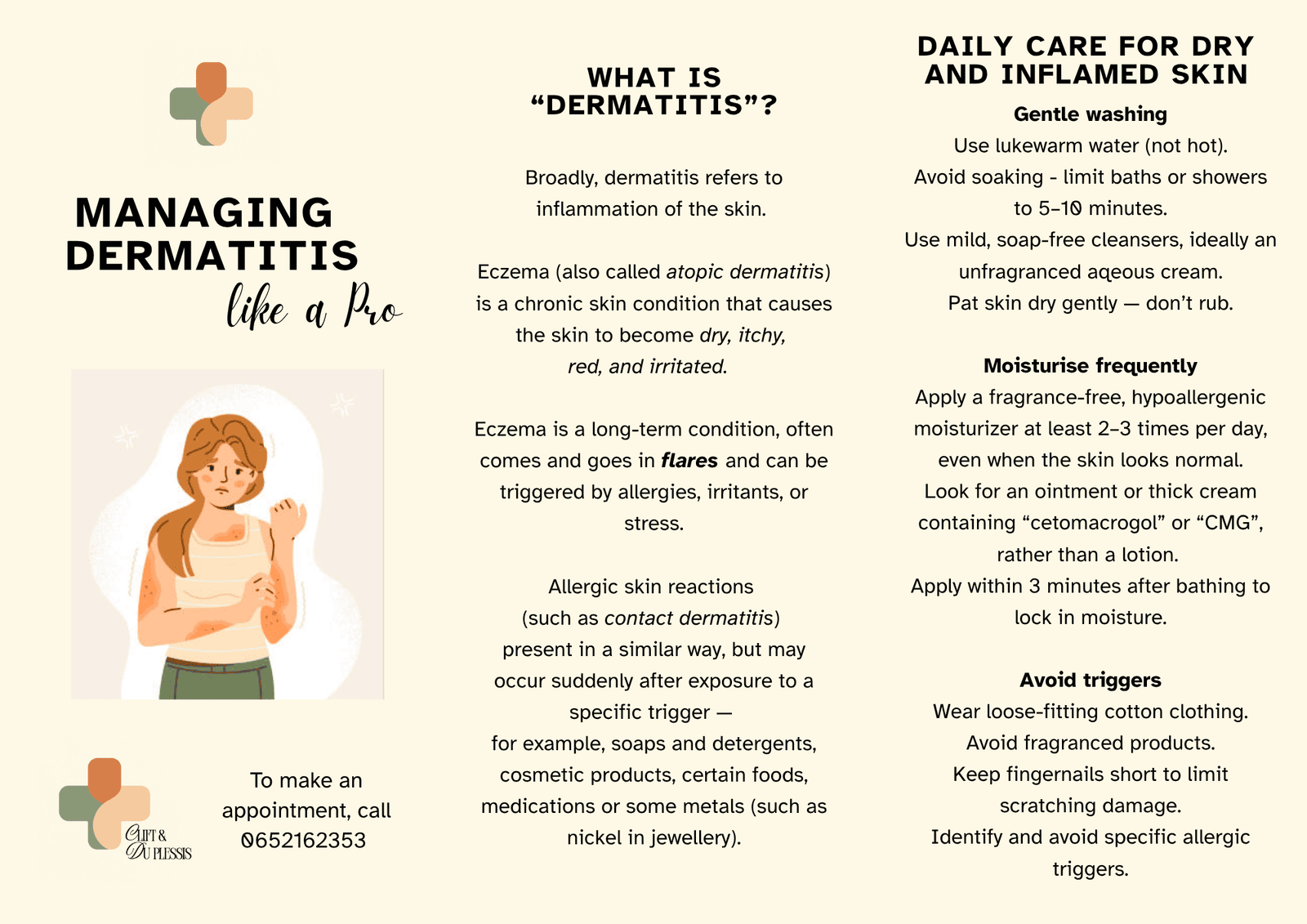
Dermatitis is a broad term that refers to inflammation of the skin. The most common form is atopic dermatitis (eczema), a chronic condition characterised by dry, itchy, inflamed skin.
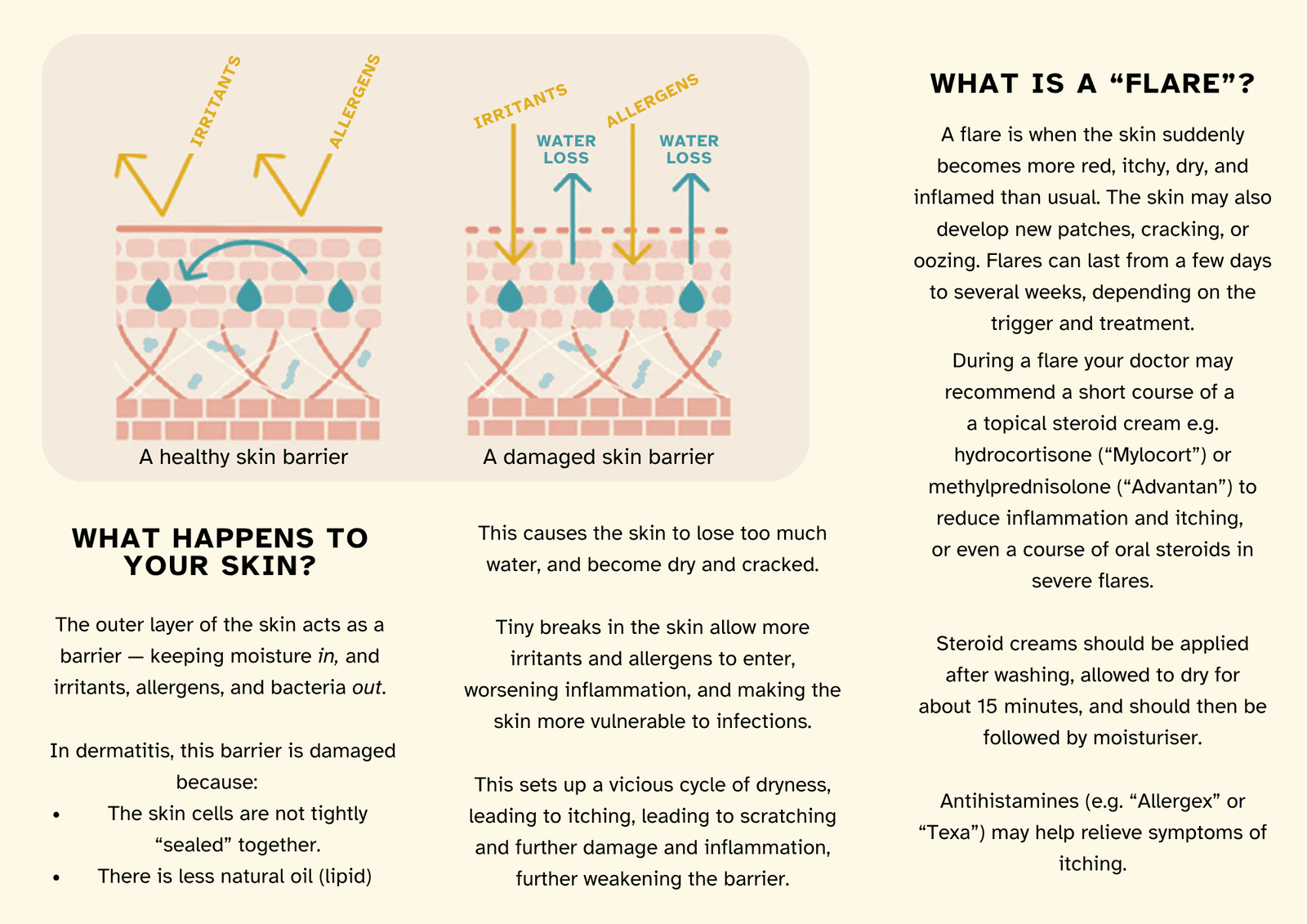
In healthy skin, the outer layer acts like a brick wall, keeping moisture in and irritants out. In eczema, this barrier becomes damaged. The skin loses water more easily, becoming dry and cracked, while allergens, irritants, and bacteria can enter more easily.
This creates a vicious cycle:
Dry skin → itching → scratching → further skin damage → more inflammation → more itching
Breaking this cycle is one of the most important goals of treatment.
What is a flare?
Most people with eczema experience periods where their symptoms worsen. During a flare, the skin may become:
More itchy than usual
Red and inflamed
Dry and flaky
Cracked or painful
Occasionally weepy or oozing
Flares can be triggered by many factors, including:
Viral illnesses
Seasonal changes
Allergens
Irritants such as soaps and detergents
Stress
Heat and sweating
During a flare, your doctor may recommend topical steroid creams or ointments to calm inflammation and itching.
What is wet wrapping?
Wet wrapping is a short-term intensive treatment used during eczema flares.
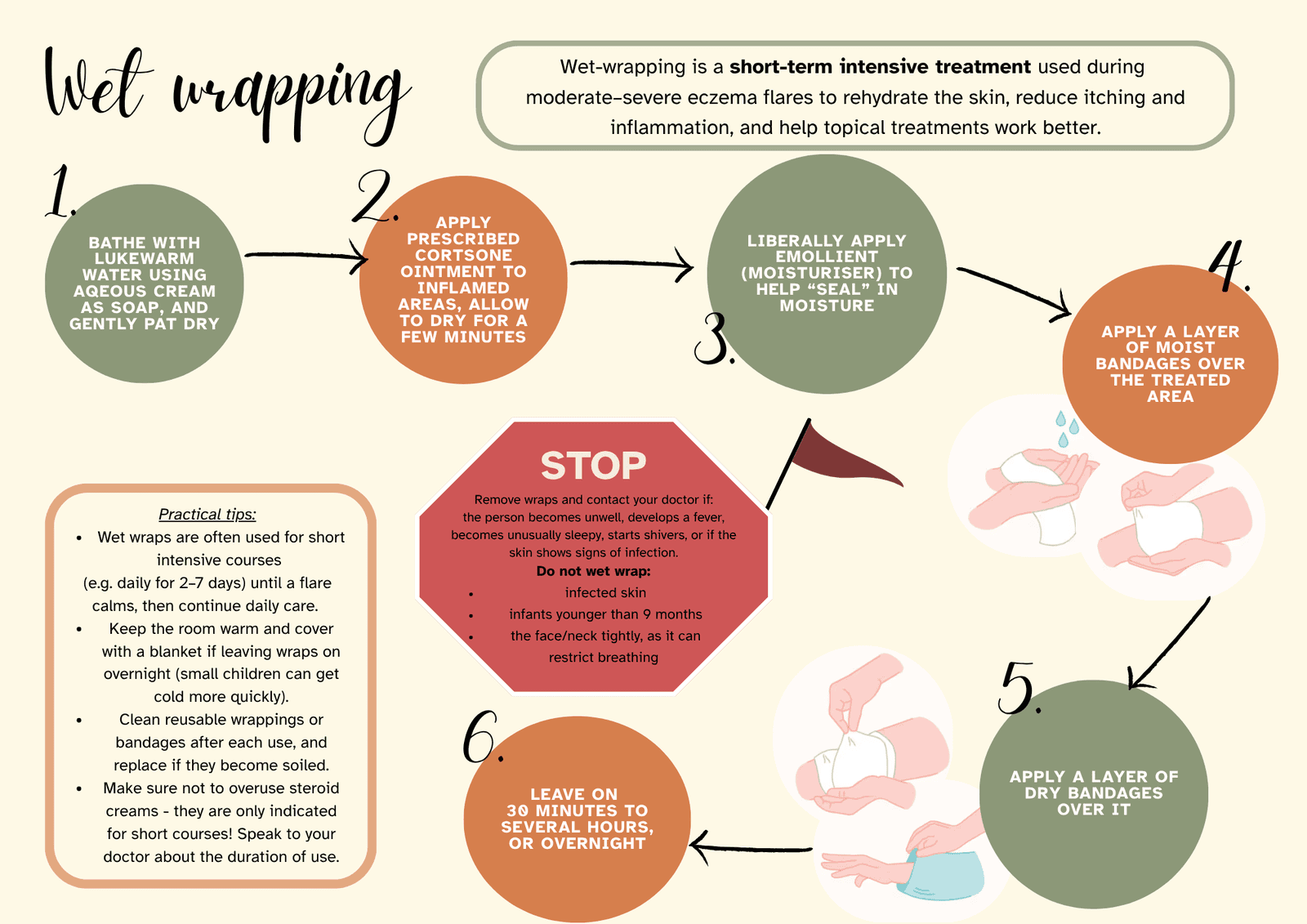
The technique involves applying prescribed treatment and moisturiser to the skin, followed by a layer of damp bandaging or clothing and then a dry layer over the top.
Although the process sounds simple, it can have a dramatic effect on symptoms.
Why does wet wrapping work?
Wet wrapping helps in several ways:
1. It rehydrates the skin. The damp inner layer provides additional moisture to severely dry skin, helping restore the damaged skin barrier.
2. It helps improve absorption of the medicated cream. The moist environment helps prescribed creams and emollients penetrate more effectively.
3. It reduces itching. The cooling sensation from the damp layer can significantly decrease itching, often providing rapid relief.
4. It protects against scratching. The bandages create a physical barrier between fingernails and inflamed skin, reducing further damage.
5. It can improve sleep. Many children and adults find that reduced itching overnight leads to much better sleep quality.
When should wet wrapping be used?
Wet wrapping is generally reserved for:
Moderate to severe eczema flares
Widespread eczema that is difficult to control
Severe itching affecting sleep
Situations where regular moisturising alone is not sufficient
It is usually used as a short intensive course for a few days while the flare settles.
When should wet wrapping NOT be used?
Wet wrapping should be avoided if:
The skin appears infected, for example if there is significant crusting, pus, or spreading redness.
The person develops fever or feels unwell
The child is younger than 9 months (unless specifically advised by a healthcare professional). Young children cannot regulate their body temperature as well as older children and adults, and wet wrapping is avoided to prevent accidentally causing hypothermia.
If you are unsure whether the skin is infected, seek medical advice before proceeding.
Common mistakes
Some of the most common reasons wet wrapping is unsuccessful include:
Not using enough moisturiser - apply a THICK layer of the moisturiser before wrapping.
Applying wraps to infected skin, as this can cause the infection to bloom and worsen.
Using hot water instead of lukewarm water.
Overusing steroid creams beyond the recommended duration, which can lead to other complications including topical steroid withdrawal and thinning of the skin.
Stopping moisturiser once the flare improves. Regular moisturising remains essential to maintain the skin barrier and reduce future flares.
The bottom line
Wet wrapping is a simple but highly effective technique that can rapidly improve eczema flares by rehydrating the skin, reducing itching, and enhancing the effectiveness of treatment.
When used correctly and for short periods, it can provide significant relief and help break the itch-scratch cycle that keeps eczema active.
If you or your child are struggling with eczema despite regular moisturising, speak to your doctor about whether wet wrapping may be appropriate as part of your treatment plan.