Managing gastro - Like a Pro!
There's a particularly nasty tummy bug going around Paarl right now, and many of our patients - adults and kiddies alike - are really struggling with it. When tummy bug hits, it can be uncomfortable and exhausting to deal with. The symptoms usually start suddenly. A child who was perfectly fine a few hours ago is now vomiting, clutching their tummy, or running to the bathroom. Nights get long, laundry piles up, and parents are left wondering: "Am I doing enough? Am I missing something?"
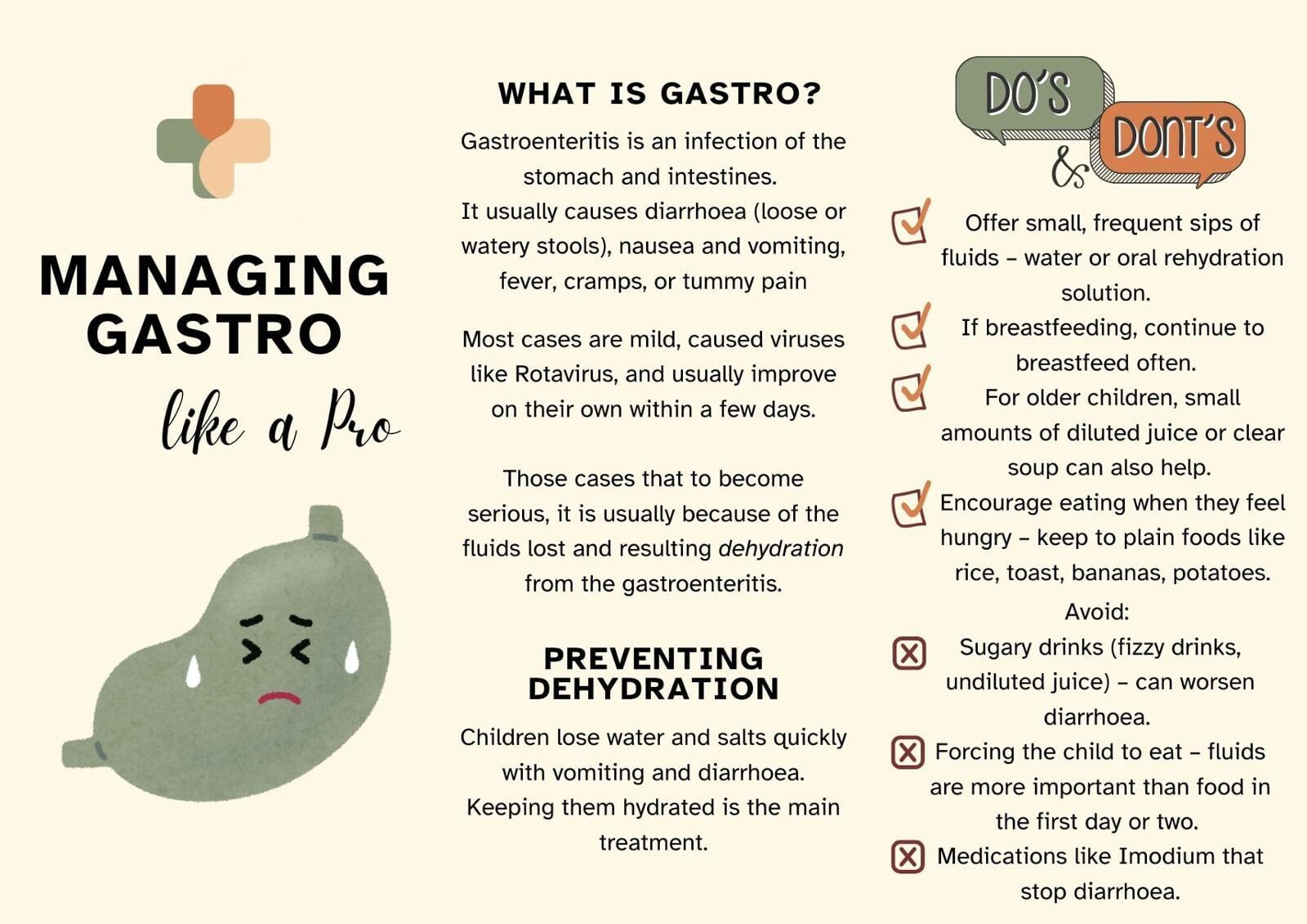
Gastroenteritis — commonly called “gastro” or "stomach flu" — is an infection of the stomach and intestines. It’s incredibly common in children, especially during certain seasons, and most often caused by viruses like rotavirus. While it can look alarming, the reassuring truth is that most cases improve on their own within a few days.
The most important thing to remember when dealing with gastro isn’t food, medications, or fancy remedies — it’s hydration, hydration, hydration! When children vomit or have diarrhoea, they lose water and essential salts quickly. That’s why small, frequent sips of fluid are far more effective than trying to get them to drink a full cup at once. Water or an oral rehydration solution works best, and if you’re breastfeeding, you should continue to do so often. For little ones who are vomiting, even a teaspoon every few minutes can make a big difference. It’s very common for appetite to disappear during the first day or two. That’s okay. Food can wait. When hunger does return, keep things simple and gentle — plain foods like rice, toast, bananas, potatoes, or clear soups are usually best tolerated. Forcing a child to eat often leads to more vomiting, so let them guide the pace.
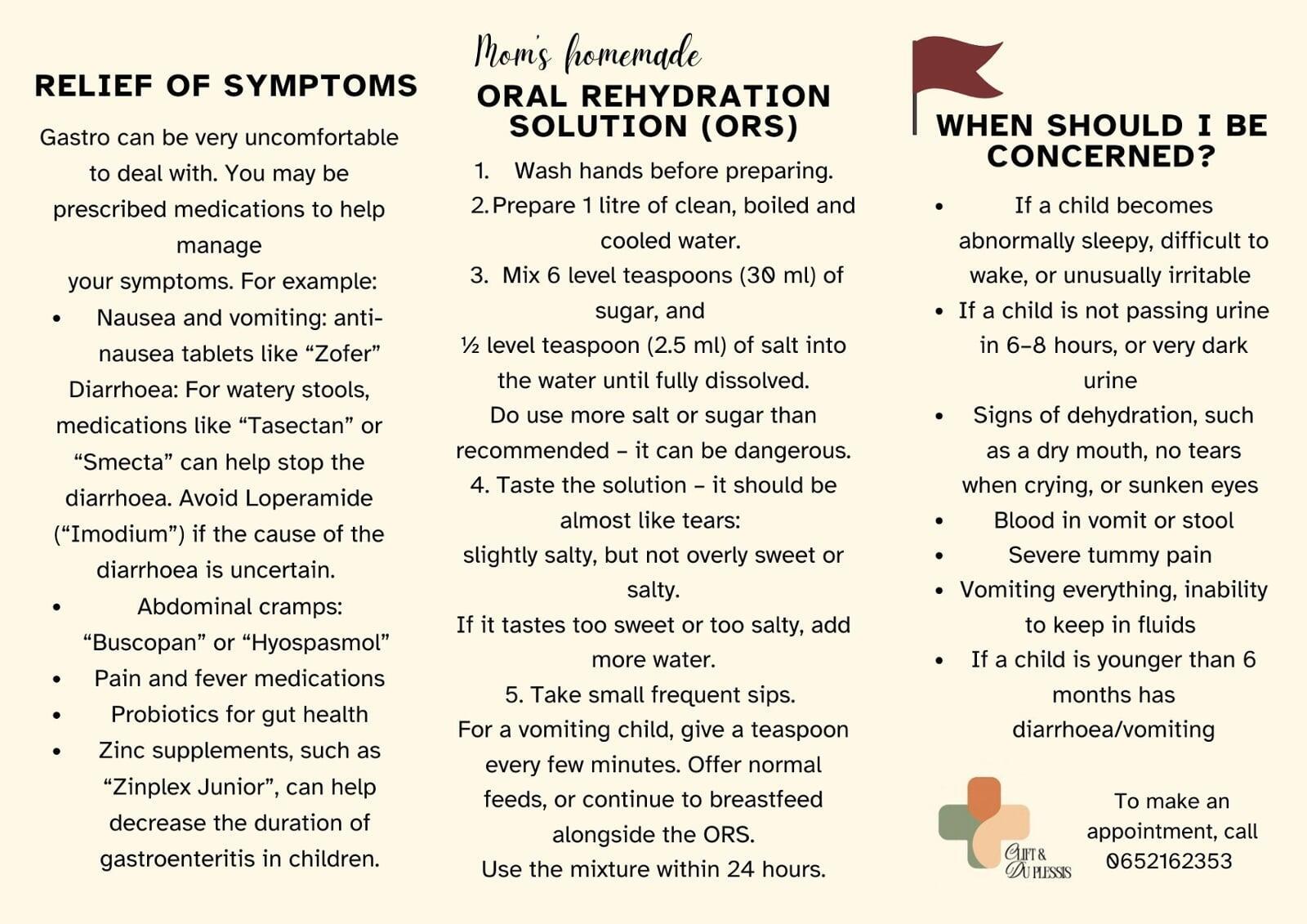
Gastro can be uncomfortable, and in some cases medication may be prescribed to help manage symptoms like nausea, vomiting, abdominal cramps, fever, or body aches. Certain diarrhoea treatments, probiotics, or zinc supplements may also be helpful, depending on the situation. However, not all anti-diarrhoeal medications are safe for all causes of gastro, especially in children, so it’s always best to check with your doctor before using them.
While most tummy bugs settle without complications, there are times when medical review is important. If a child becomes unusually sleepy, difficult to wake, very irritable, stops passing urine, shows signs of dehydration, or is unable to keep any fluids down, they should be assessed. The same applies if there is blood in vomit or stools or severe abdominal pain (this may indicate a bacterial cause of diarrhoea, which may need antibiotics!), or if the child is under six months old with vomiting or diarrhoea.
Gastro can be exhausting — for children and parents alike. If you’re feeling unsure, overwhelmed, or worried that your child isn’t improving, you’re not alone, and help is available. Sometimes reassurance is all that’s needed; other times, a closer look can make all the difference. And remember - it's infectious, so make sure everyone in the home washes their hands!
Below is our simple visual guide to help you navigate gastro with confidence, including how to prepare a balanced and safe oral rehydration solution at home, and what warning signs to watch for. If you're unsure or worried - give us a call and make an appointment!