Why Sinusitis Is So Common In Paarl — And How To Treat It Effectively
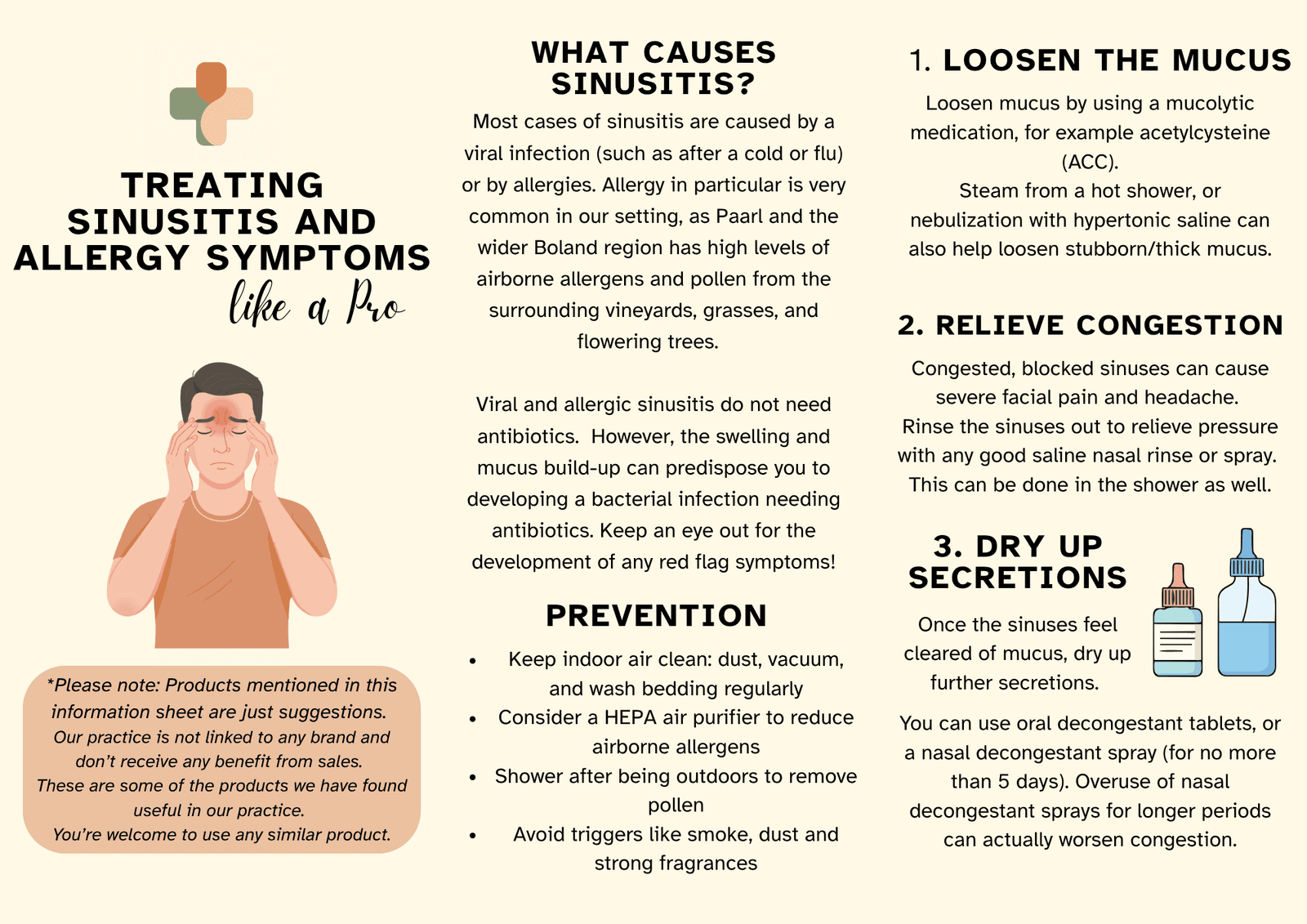
If you live in Paarl or the wider Boland, you’ve probably experienced it: that heavy, pressure-like headache, a blocked nose that just won’t clear, and the feeling that your whole face is congested.
Sinusitis is incredibly common in our area — and there’s a good reason why.
Why Sinus Problems Are So Common in the Boland
Our beautiful surroundings come with a trade-off. The vineyards, grasses, and flowering trees release high levels of pollen and airborne allergens, especially during certain times of the year.
This makes allergic sinus inflammation very common — often triggered by:
- Seasonal pollen from the trees and grasses
- Dust mites, animal dander, and environmental allergens, including pesticides, air pollution
- Viral infections like the common cold or flu
Most sinusitis is not bacterial, which means it doesn’t need antibiotics. However, inflammation and mucus build-up can sometimes lead to a secondary bacterial infection — and that’s when treatment needs to be more careful.
What Actually Causes the Pain?
Sinus headaches are not just “blocked noses.” The pain and pressure come from:
- Swelling of the sinus lining
- Thick mucus that can’t drain properly
- Build-up of pressure inside the sinus cavities
So effective treatment isn’t just about pain relief — it’s about fixing the underlying blockage and inflammation, and relieving the blockage that is causing the pressure.
How to Treat Sinusitis Effectively at Home
A simple way to approach sinus treatment is to think in three key steps:
1. Loosen the Mucus
Start by thinning thick mucus so it can drain more easily. Options include:
- Mucolytics (like ACC)
- Steam inhalation (e.g., a hot shower)
- Nebulization with hypertonic saline for stubborn symptoms
2. Relieve Congestion
Once mucus is loosened, help the sinuses clear physically.
Use a saline nasal spray or rinse - there are various sprays and rinse "kits" on the market, or go old school with a Netty pot!
Pro tip: do the rinse in the shower, so the steam helps loosen things, and all the mucus goes straight down the drain.
3. Dry Up Excess Secretions
After clearing the sinuses, reduce ongoing mucus production:
- Short-term nasal decongestant spray (no more than 5 days)
- Oral decongestants where appropriate
This helps prevent the cycle from continuing.
What About “Sinus Tablets”?
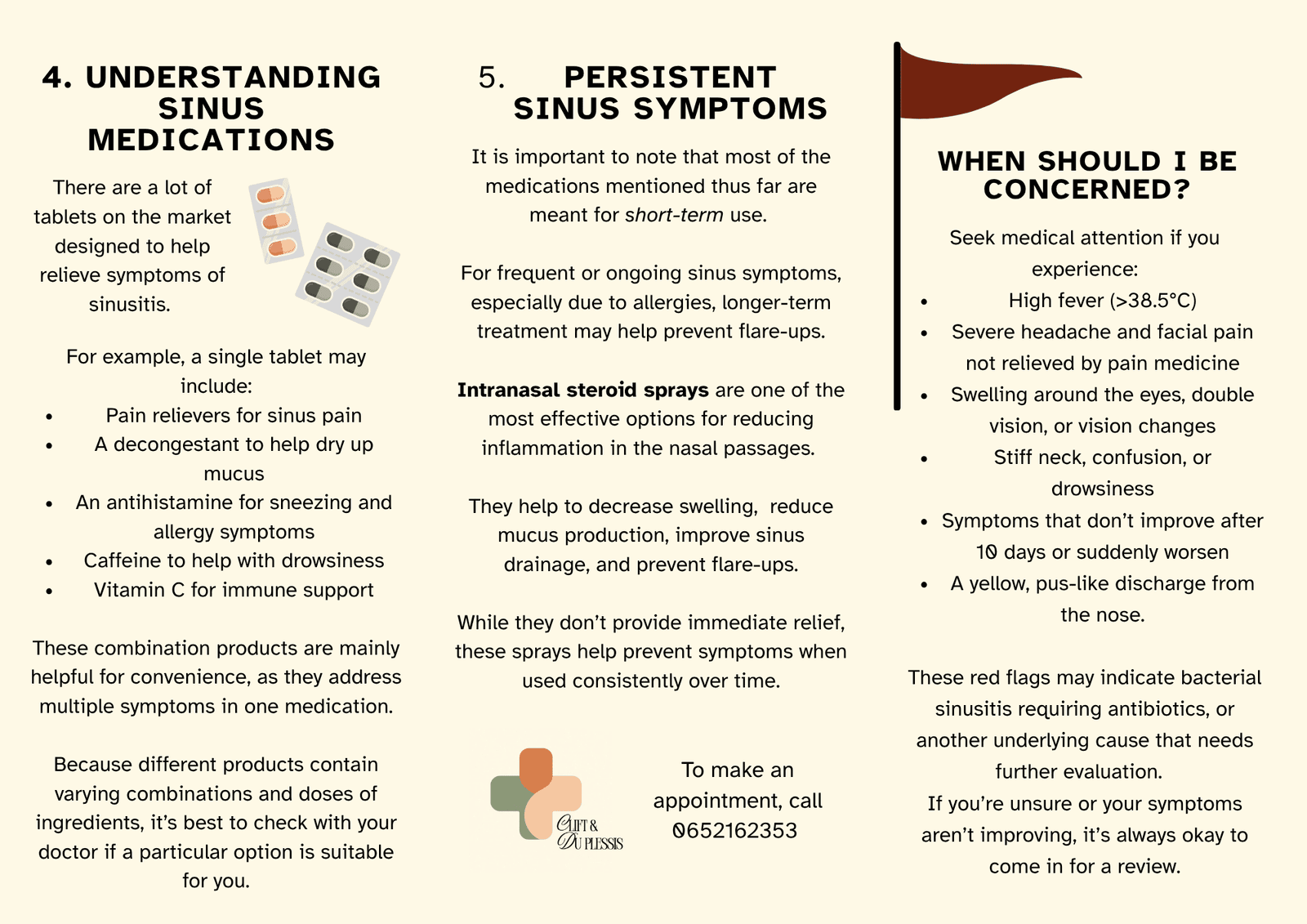
Many over-the-counter sinus medications combine several ingredients into one tablet — often including pain relief for headache, decongestants, antihistamines, and sometimes caffeine or vitamin C.
These can be helpful because they reduce the number of separate medications you need to take.
However, because different products contain varying combinations and doses of ingredients, there can be some nuance there. Not all combinations suit everyone, and some of the included ingredients may not be safe for someone with other chronic conditions or medications. Speak to your doctor for guidance on an option that is safe and appropriate for you.
What About Long-Term Management?
If you find yourself dealing with sinus symptoms regularly — especially if they’re linked to allergies — it’s worth thinking beyond just short-term relief.
For many patients, ongoing inflammation in the nasal passages is the underlying problem. This is where longer-term treatments can make a big difference.
Intranasal Steroid Sprays
Intranasal corticosteroid sprays (often simply called “nasal steroid sprays”) are one of the most effective treatments for allergic sinusitis.
They work by reducing inflammation in the nasal passages, decreasing mucus production over time, improving sinus drainage and preventing recurrent flare-ups.
Unlike decongestant sprays, these are safe for longer-term use when used correctly. For patients with frequent or seasonal symptoms, these sprays can be a game changer in preventing that cycle of congestion, pressure, and headache.
A few important points:
- They don’t work instantly — expect gradual improvement over a few days to weeks
- Consistency is key — they work best when used daily
- Proper technique matters. Aim the spray nozzle slightly outward, away from the nasal septum. Avoid a strong sniff — this can pull the medicine into your throat instead of keeping it in your nose. You should not be tasting the medicine in your mouth after spraying it. If you do, it likely means the medication has gone past the nose into the throat, where it is less effective. Incorrect technique can also increase side effects like throat irritation or, rarely, fungal infections (thrush).
Managing the Allergy Component
If allergies are a trigger, longer-term control may also include:
- Oral antihistamines - particularly the longer-acting, non-drowsy formulations are very helpful
- Reducing exposure to known triggers where possible
- Regular saline rinses to clear allergens from the nasal passages
When to Consider a Review
If you are:
- Needing repeated courses of treatment
- Experiencing frequent “sinus headaches”
- Or not improving with standard care
…it’s worth coming in for a review. Sometimes we need to reassess the diagnosis, optimise treatment, or consider other contributing factors.
When Should You Be Concerned?
Seek medical attention if you experience:
- High fever (above 38.5°C)
- Severe headache or facial pain not relieved by medication
- Swelling around the eyes or changes in vision
- Double vision
- Neck stiffness, confusion, or drowsiness
- Symptoms lasting more than 10 days or suddenly worsening
- Thick yellow or pus-like nasal discharge
These may indicate a bacterial infection or a more serious condition requiring evaluation.
A Final Word
Sinusitis can be incredibly uncomfortable — especially in an environment like ours, where allergies are so common.
But with the right approach, most cases can be managed effectively at home without antibiotics. Understanding why you’re using certain treatments, preventing flare-ups, and knowing when to escalate care can help you feel more in control and recover more quickly.
And as always, if you’re unsure or your symptoms aren’t improving, don’t hesitate to reach out. We’re here to help.