The Well Woman's Guide to Preventative Care
A woman’s health needs change throughout her life — from your first period in adolescence, through your reproductive years, and eventually into perimenopause and menopause. Each stage brings its own changes, challenges and healthcare needs.
This blog is by no means an exhaustive guide. Women’s health is a vast and ever-evolving field, and there is far more to explore than we could possibly cover in one article. Instead, our aim is to highlight a few important basics that every woman should know: how your body works, what is normal for you, and which routine check-ups can help you stay on top of your health.
Preventative care is about being proactive, not just reactive.
By understanding your body, keeping up with recommended screenings and recognising when something feels different, you can help identify potential health concerns early — often before they become more serious. After all, looking after your health starts long before something feels wrong.
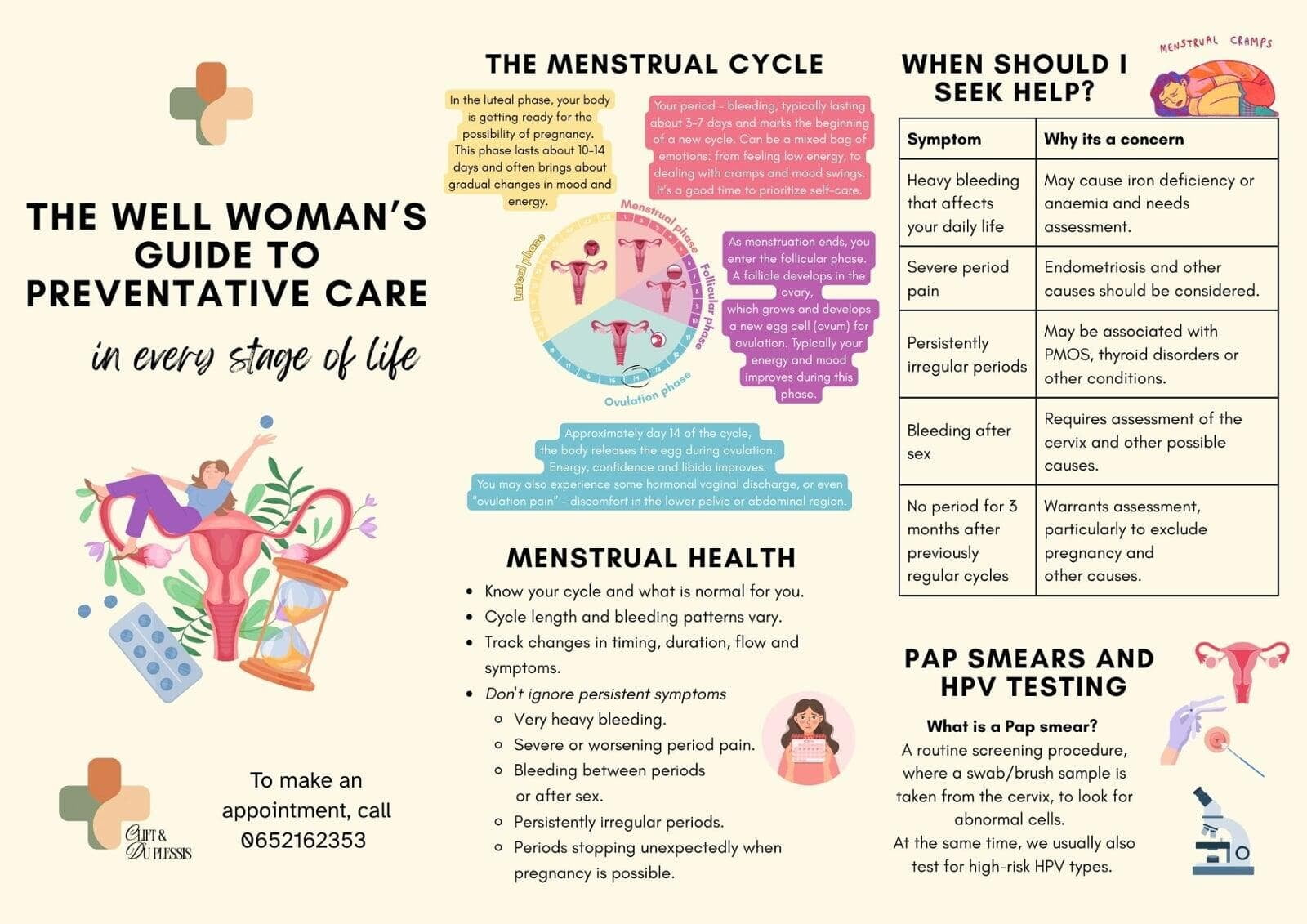
- Menstrual Health: What's Normal, and When Should You Worry?
Your menstrual cycle can provide useful information about your reproductive and general health. Cycle length, bleeding patterns and symptoms vary between women, and some variation is normal. However, severe period pain, excessively heavy bleeding and persistent changes in your cycle should not simply be accepted as part of being a woman.
Signs that deserve attention:
- Heavy periods: Bleeding that interferes with everyday activities, requires frequent changes of sanitary products or causes fatigue and dizziness may need investigation. Heavy menstrual bleeding can contribute to iron deficiency and anaemia.
- Severe period pain: Period pain that disrupts your work, studies, relationships or daily activities deserves assessment, particularly if it is worsening or not responding to usual treatment.
- Irregular or absent periods: Persistent irregularity or periods that stop unexpectedly may be associated with pregnancy, hormonal conditions, thyroid problems or other underlying causes.
- Bleeding between periods or after sex: This should be assessed rather than automatically attributed to hormonal changes or contraception.
- A significant change in your usual cycle: If your periods become substantially heavier, more painful or less predictable, discuss the change with your healthcare provider.
*A word on Polymetabolic ovarian syndrome (PMOS, formerly known as PCOS):
PMOS is a hormonal and metabolic condition that can affect ovulation.
Symptoms may include:
- Irregular or absent periods
- Acne
- Increased facial or body hair
- Difficulties falling pregnant
- Metabolic changes, including an increased risk of insulin resistance and type 1 diabetes.
In the past a lot of emphasis was placed on the presence of cysts in the ovaries in the diagnosis of PMOS. We now know that not all women with PMOS have ovarian cysts.
Diagnosis involves assessing symptoms and, where appropriate, clinical findings and investigations including testing your hormones and testosterone levels.
Management depends on your symptoms and goals, whether that means regulating periods, addressing metabolic health or planning a pregnancy.
*Another word on Endometriosis:
Endometriosis occurs when tissue similar to the lining of the uterus grows outside it, potentially causing inflammation, pain and scarring.
Symptoms may include:
Symptoms vary widely between individuals, and diagnosis can be tricky - often taking years. There is no blood test that can diagnose endometriosis, and imaging can be very unreliable. An ultrasound, CT or even MRI scan can come back completely normal even when there are endometriosis lesions present. The only sure-fire way to diagnose endometriosis is with a diagnostic laparoscopy - "key-hole" surgery, where the surgeon goes to physically look for the endometriosis lesions.
The bottom line: Menstrual symptoms that affect your life, like irregular periods and severe pain, deserve attention. You do not have to simply tolerate symptoms that interfere with your wellbeing.
2. Cervical Health: Pap Smears and HPV Testing
Why do we need to do Pap smears and HPV testing?
Cervical cancer is one of the most cancers in women, and carries a high mortality. But, we can actively work to prevent it, through vaccination and appropriate screening.
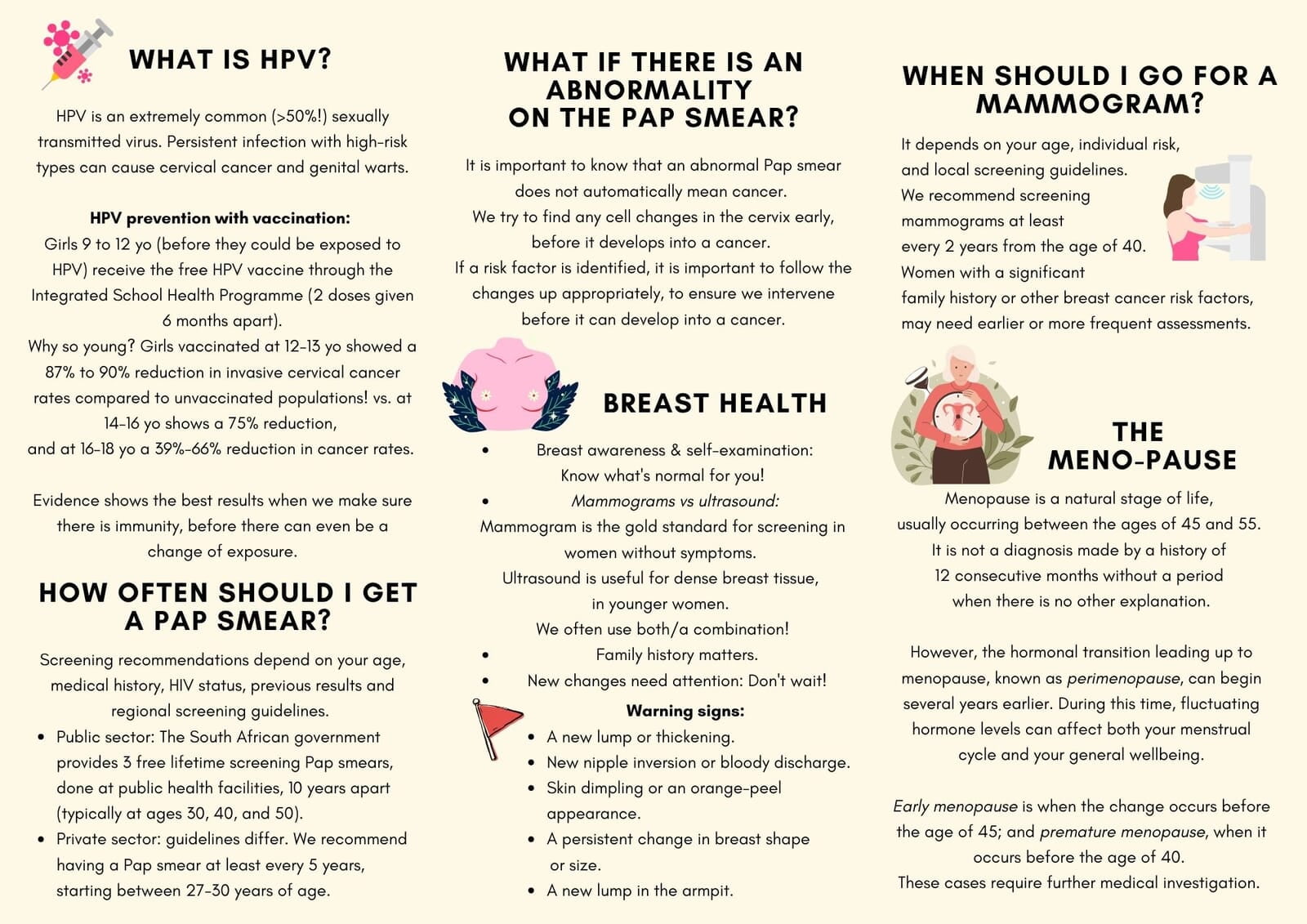
Human papillomavirus (HPV) is a very, very common virus, usually transmitted through sexual contact. Persistent infection with certain high-risk HPV subtypes of the virus can cause changes in cervical cells that can eventually develop into cervical cancer.
If we identify that someone is infected with one of these high-risk subtypes, even if they have no changes to suggest any abnormalities in the cervix, then we know we need to be very vigilant and screen them more frequently for changes.
What is the difference between a Pap smear and an HPV test?
- A Pap smear looks for abnormal cells on the cervix - cancer, or pre-cancerous changes.
- An HPV test detects high-risk HPV types that associated with a risk of developing cervical cancer.
These tests may be performed separately or together.
Vaccination in girls and young women offers important protection against HPV infection, but does not eliminate the need for cervical screening.
When do I need to go for screening?
Screening recommendations depend on your age, medical history, HIV status, previous results and regional screening guidelines.
Your GP can help you determine when you should be screened and how often.
In the state sector in South Africa, an otherwise healthy, asymptomatic, HIV negative woman is given 3 free lifetime screening tests. These can be done at public health facilities, 10 years apart (typically at ages 30, 40, and 50).
In the private sector, guidelines differ. But we recommend having a Pap smear at least every 5 years, starting between 27-30 years of age.
What if the Pap smear shows an abnormal result?
It is important to note that an abnormal result does not automatically mean you have cervical cancer.
We often pick up early changes to cells, before it develops into anything to worry about. The most important part is that we appropriately follow up these changes and intervene early, before it becomes a problem.
When should I seek medical advice?
Don't wait for your next routine screening appointment if you experience unusual vaginal bleeding, particularly bleeding after sex or between periods. These symptoms can have several causes - some serious and some not - but they should be assessed.
*A word on HPV vaccination
Many mothers have concerns about giving a vaccination against a sexually-transmitted infection to their young daughters, feeling that it has an implication of promiscuity - but that is not the case at all!
The aim behind vaccinating girls at a young age is not because we anticipate that they will have sexual contact at that age. It is about establishing immunity against HPV early, before there ever could be an opportunity for exposure.
Population data (including long-term studies from Sweden, Scotland, and England) show near-eradication in invasive cervical cancer and high-grade pre-cancerous lesions amongst women who were vaccinated against HPV around ages 12–13.
How exciting is the thought that an entire generation of women may be free of the risk of cervical cancer?
3. Breast Health: Know What's Normal for You
Why is breast awareness important?
Breast awareness is an important part of looking after your health. Becoming familiar with the usual appearance and feel of your breasts can help you recognise changes that need attention. Identifying these changes early allows us to investigate them promptly and, where necessary, start treatment as soon as possible.
You do not need to follow a strict breast self-examination routine. Instead, the aim is to know what is normal for you and to seek advice if you notice something new or unusual.
What tests do we use to screen for breast cancer?
- Ultrasound is another useful tool for evaluating the breasts, particularly in younger women with denser breast tissue.
- Sometimes, both investigations are needed. The appropriate approach depends on your age, symptoms and individual risk factors.
- A new lump or thickening in the breast or armpit.
- New nipple inversion or unusual nipple discharge, particularly bloody discharge.
- Skin dimpling or an orange-peel appearance.
- A persistent change in breast shape or size.
- Persistent redness, swelling or changes in the skin of the breast.
- Periods becoming irregular or changing in flow.
- Hot flushes and night sweats.
- Disrupted sleep.
- Mood changes, anxiety or irritability.
- Vaginal dryness or discomfort during sex.
- Changes in libido or concentration.
- Stay up to date with cervical screening. Ask your GP when your next Pap smear or HPV test is due.
- Understand your breast cancer risk. Discuss your family history and appropriate screening options with your healthcare provider. Do regular self-exams in the shower, and know your normal to make it easier to detect changes earlier!
- Know your menstrual cycle. Track your periods and seek help for persistent or disruptive symptoms.
- Do not dismiss severe period pain or unusual bleeding. These symptoms deserve assessment, particularly if they are new, worsening or affecting your daily life.
- Discuss perimenopause and menopause. Help is available if symptoms are affecting your sleep, mood, relationships or quality of life.
- Keep up with general preventative healthcare. This may include blood pressure checks and other screening based on your age, medical history and individual risk factors.
The recommended screening schedule depends on your age, personal and family history, and applicable screening guidelines. Women with a significant family history (especially where the BRCA2 gene has been indentified) or other breast cancer risk factors may need earlier or more frequent assessment. Discuss your individual screening needs with your GP.
Important: If you notice a change in your breasts, do not wait for your next screening mammogram. Arrange an assessment, even if your last mammogram was normal.
Breast changes to look out for
Most breast changes are not cancer, but they should not be ignored. Having a change assessed does not mean you should assume the worst; it simply means taking the appropriate steps to understand what is happening.
4. Perimenopause: When Your Body Starts to Change
Menopause is a natural stage of life that usually occurs between the ages of 45 and 55. It is defined as having gone 12 consecutive months without a menstrual period, provided there is no other explanation for the absence of periods.
However, the hormonal transition leading up to menopause, known as perimenopause, can begin several years earlier. During this time, fluctuating hormone levels can affect both your menstrual cycle and your general wellbeing.
Common symptoms include:
Some women experience only mild symptoms and can manage with lifestyle adjustments. Others find that these changes significantly affect their quality of life, and may require treatment to help them cope.
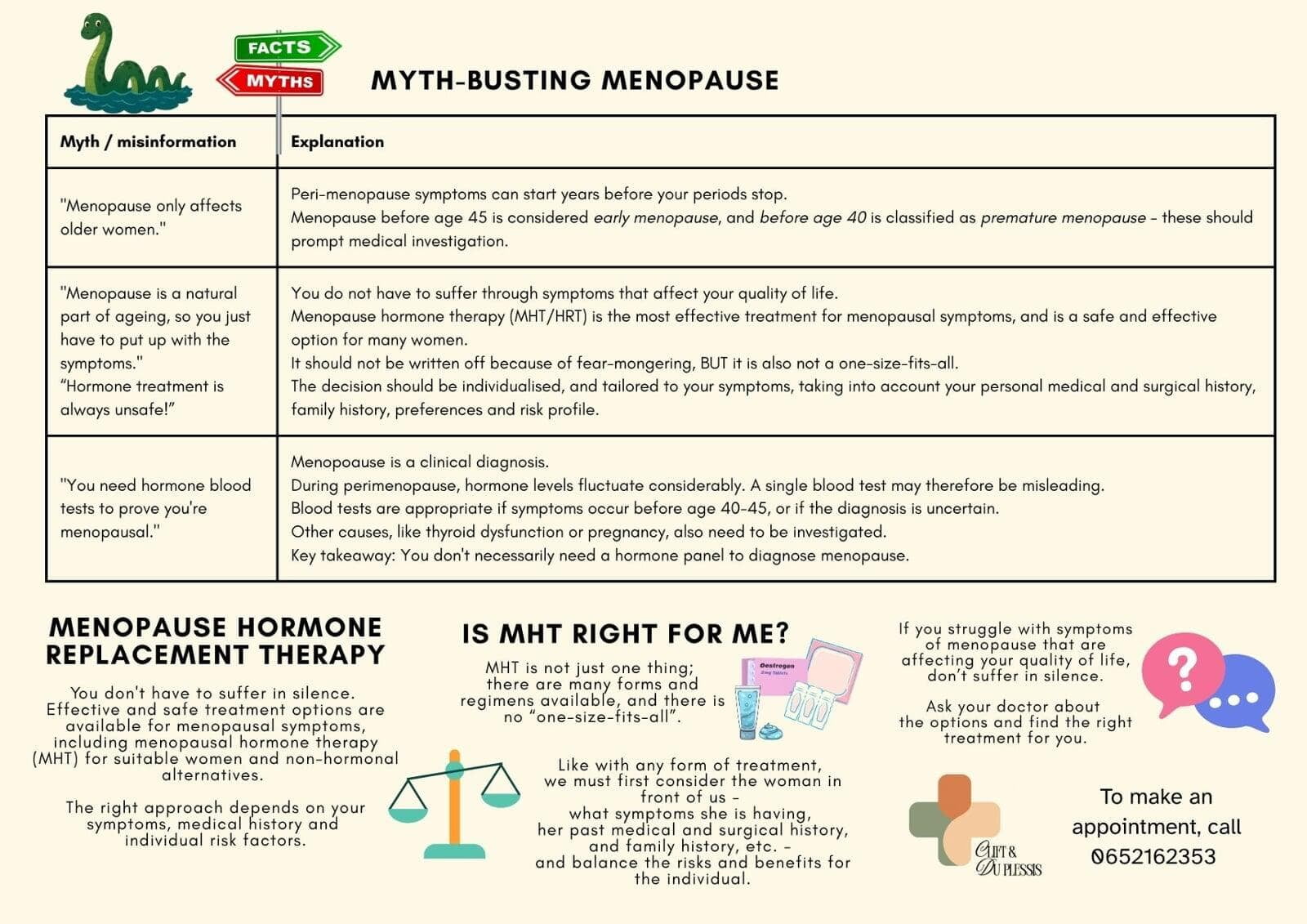
Perimenopause is usually diagnosed clinically in women aged 45 and older, who have typical symptoms but whose periods may not yet have stopped. During this time, hormone levels fluctuate considerable. Because of this, hormone blood tests are not routinely necessary in this group.
You can have hormone levels that fall within the normal range and still experience symptoms of perimenopause, and a single reading may be misleading.
Symptoms occurring before age 45 may warrant assessment for early menopause, while menopause before age 40 is considered premature menopause. These cases need to be appropriately evaluated and investigated, including doing blood test, to rule out other potential causes.
You don't have to suffer in silence
If you have severe menopausal symptoms that are affecting your quality of life, effective and safe treatment options are available.
One such treatment is menopausal hormone therapy (MHT, formerly called HRT).
MHT is not for everyone and - like every medication - is not 100% risk free. But for suitable women it can be life changing. MHT is also not a monolith: there are many different formulations, types and versions out there. There is no one-size-fits-all. The right approach depends on your symptoms, past medical history, surgical history, family history, and personal preferences. Each women's personal risk:benefit profile should be considered, before choosing the right management plan for them.
If changes in your cycle, sleep, mood or general wellbeing are affecting your quality of life, speak to your GP. You do not have to wait until your periods stop completely before seeking help.
Important: any vaginal bleeding after menopause should be medically assessed, even if it occurs only once or consists of light spotting.
Making Preventative Healthcare a Priority
Looking after your health does not mean having every available test or investigation in the book.
It means knowing which checks are appropriate for you, recognizing changes in your body and seeking help when something does not feel right.
A few simple steps can help you take a more proactive approach:
Your healthcare needs are personal, and preventative care should be too.
If you have concerns about your menstrual cycle, need advice about preventative screening or are experiencing symptoms you would like to discuss, we are here to help.
Your health matters at every stage of life.